

Just as the Trojan Horse brought unforeseen chaos within, faulty plumbing installation can release a torrent of complications in your home. You might notice water leaks that silently erode your walls or mold that creeps in, threatening your health. The impact isn’t just structural; it hits your wallet too with rising utility bills. Imagine waking up to inefficient water flow disrupting your morning routine or the costly nightmare of a burst pipe. These issues can even devalue your property. So, what exactly are the hidden pitfalls you should be wary of?
Key Takeaways
- Faulty plumbing installation can lead to water leaks, causing structural damage to walls, floors, and ceilings.
- Inefficient plumbing can result in increased utility bills due to unnoticed water leaks.
- Mold and mildew growth thrive in damp environments created by plumbing issues, posing health risks.
- Poorly installed plumbing can cause inefficient water flow, affecting water pressure in showers and faucets.
- Faulty plumbing may lead to pipe bursts, resulting in significant water damage and high repair costs.
Water Leaks and Damage
When faulty plumbing is installed, water leaks can quickly turn into a homeowner’s nightmare, wreaking havoc on your property. Imagine finding a sudden puddle in your kitchen or a persistent drip echoing through the night. These leaks aren’t just annoying; they can lead to significant damage if not addressed promptly. Water can seep into walls, floors, and ceilings, compromising the structural integrity of your home. Over time, wooden beams may rot, drywall can become soft, and paint might start peeling.
You might notice warped flooring or stained walls, which are telltale signs of water damage. It’s essential to act fast. Ignoring these issues only makes them worse, leading to more extensive repairs and higher costs down the road. Fixing a simple leak is far less expensive than replacing water-damaged structures. Also, don’t forget about your home’s electrical systems. Water and electricity are a dangerous mix, and leaks can create risks of electrical shorts or fires.
Inspect your plumbing regularly and address issues as soon as they arise. By staying vigilant and proactive, you can protect your home from the extensive damage that faulty plumbing can cause.
Mold and Mildew Growth
Water leaks not only cause immediate structural issues but also create the perfect breeding ground for mold and mildew. When faulty plumbing leads to hidden leaks, moisture seeps into walls, floors, and ceilings. This damp environment, combined with limited airflow, allows mold and mildew to flourish. You might notice a musty odor, which is often the first sign of their presence. These fungi can spread rapidly, damaging your home’s interior and affecting air quality.
Mold and mildew aren’t just unsightly; they pose serious health risks. Exposure can trigger allergies, respiratory issues, and even more severe health problems, especially for those with weakened immune systems. You may experience symptoms like sneezing, coughing, or skin irritation, which can escalate if not addressed promptly.
It’s essential to act fast if you suspect mold or mildew growth. Inspect areas prone to leaks, such as under sinks or around appliances like dishwashers and washing machines. Regular maintenance and prompt repairs of plumbing issues can prevent mold and mildew from taking hold. Don’t wait until you see visible growth – by then, the problem might already be extensive, requiring professional remediation. Keep your home safe and healthy by staying vigilant.
Increased Utility Bills
Due to faulty plumbing installation, you might face increased utility bills as unnoticed leaks waste water continuously. These leaks can occur in hidden areas like behind walls or under floors, making them hard to detect. You might not even realize there’s an issue until your water bill arrives notably higher than usual. This waste isn’t just limited to water; it also impacts your energy bills. If the leaks involve hot water pipes, your water heater works overtime to maintain the desired temperature, increasing your energy consumption and, consequently, your bills.
You might think a small drip doesn’t matter, but even a minor leak can waste thousands of gallons of water annually. This unnecessary waste not only affects your wallet but also contributes to environmental issues. To avoid escalating costs, regularly check for signs of leaks, such as damp spots, reduced water pressure, or the sound of running water when everything’s off. Installing a water meter or utilizing smart technology can help you monitor usage and detect anomalies early. Taking these proactive steps can prevent a minor problem from turning into a costly expense, ensuring your plumbing system runs efficiently and your utility bills remain manageable.
Inefficient Water Flow
A common consequence of faulty plumbing installation is inefficient water flow, which disrupts daily routines and tasks. Imagine trying to start your day, but your shower dribbles instead of providing a steady stream. Cooking becomes a hassle when the kitchen faucet barely trickles, making simple tasks like washing vegetables or filling a pot feel like a marathon. You might find yourself waiting endlessly for your washing machine to fill, delaying your laundry plans and throwing off your entire schedule.
Inefficient water flow often results from poorly aligned pipes or incorrect pipe sizes, restricting the flow of water through your system. When pipes aren’t installed correctly, you might notice fluctuating water pressure, turning what should be a invigorating shower into an unpredictable experience. Even minor installation errors can lead to significant disruptions, leaving you frustrated and wasting time on what should be straightforward chores.
Additionally, this problem can extend to outdoor spaces. Garden irrigation systems may underperform, leaving plants under-watered and causing your lawn to suffer. If you rely on a sprinkler system, you could end up with uneven watering, leading to inconsistent growth. Addressing these issues promptly can restore efficiency and improve your daily life.
Pipe Bursts and Repair Costs
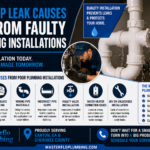
Beyond inefficient water flow, faulty plumbing installation can lead to more severe problems like pipe bursts, which often come with hefty repair costs. When pipes are installed incorrectly, they can be under constant stress or pressure, making them susceptible to leaks and bursts. A burst pipe isn’t just a minor inconvenience; it can cause significant water damage in your home, leading to expensive repairs. You might find yourself dealing with soaked carpets, damaged walls, and ruined furniture, all of which add to your overall expenses.
When a pipe bursts, you’ll need to act quickly to minimize damage. First, shut off the main water supply to stop the flooding. Then, you’ll likely need to hire a professional plumber to assess and repair the damage. This can cost anywhere from a few hundred to several thousand dollars, depending on the extent of the burst and the repairs required. Additionally, if water damage occurs, you might also need to involve a restoration company, further increasing costs. Proper installation and regular maintenance can help prevent these issues and save you from unexpected expenses and stress in the long run.
Structural Damage Risks
Faulty plumbing’s consequences don’t stop at water damage; they can extend to serious structural damage risks. When water seeps into walls, floors, and ceilings, it compromises the integrity of your home. Over time, the continuous exposure weakens the materials, leading to sagging floorboards, warped walls, and even collapsing ceilings. You might think it’s just a small leak, but if left unchecked, it can turn into a structural nightmare.
Water accumulation around your home’s foundation is another concern. This can lead to soil erosion, causing shifts that put undue stress on the foundation. If you notice cracks in your walls or foundation, don’t ignore them. These are signs that your home is under strain and could eventually lead to significant structural failures.
Moreover, wooden structures are particularly vulnerable. Waterlogged beams and supports can rot, losing their strength and stability. This doesn’t just affect the look of your home; it impacts safety. You don’t want to risk your home turning into a hazard zone. Address any plumbing issues promptly to avoid these costly and dangerous structural problems. Remember, prevention is always better than dealing with the aftermath of neglected plumbing issues.
Health Hazards From Mold
Imagine entering your home and noticing a musty smell or finding discolored patches on the walls—these could be signs of mold growth due to faulty plumbing. Mold thrives in damp environments, and leaky pipes create the perfect breeding ground. But beyond the unsightly appearance, mold poses vital health risks that you shouldn’t ignore.
When mold becomes airborne, it can trigger various health issues, especially for those with pre-existing conditions or sensitivities. Here are some health hazards associated with mold exposure:
- Respiratory Problems: Mold spores can irritate your respiratory system, leading to symptoms like coughing, sneezing, and shortness of breath. Prolonged exposure can exacerbate asthma or cause new allergies to develop.
- Skin Irritations: Direct contact with mold can result in skin rashes and itching. Sensitive individuals might experience more severe reactions, requiring medical attention.
- Neurological Symptoms: Some people report headaches, memory loss, and mood swings due to mold exposure. Though less common, these symptoms can significantly impact your daily life.
Addressing faulty plumbing quickly is crucial to prevent mold from becoming a health hazard in your home. By doing so, you’re safeguarding your family’s health and maintaining a safer living environment.
Decreased Property Value
While health concerns from mold are alarming, don’t overlook the financial implications of faulty plumbing. When plumbing issues are evident, potential buyers might see your property as a risky investment, leading them to either back out or offer considerably less than your asking price. Even if you’re not planning to sell your home immediately, these problems can greatly decrease your property’s value over time.
Leaks, water damage, and mold can wreak havoc on a home’s structural integrity. This damage can result in costly repairs that could have been avoided with proper plumbing installation. When buyers notice signs of water damage, they often anticipate additional hidden problems, which makes your property less appealing. A home inspection will likely uncover these issues, forcing you to lower your price or cover repair costs before closing a sale.
Moreover, in today’s competitive real estate market, properties with flawless upkeep tend to sell faster and for higher prices. Faulty plumbing can deter buyers who are unwilling to tackle these repairs. Ensuring your plumbing is up to standard not only prevents unexpected expenses but also protects your property’s market value, ensuring that you get the best return on your investment.