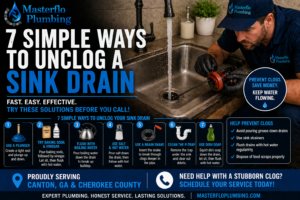


If you have a slow-draining sink, start by trying a plunger. Make sure it seals the drain properly, then plunge vigorously to dislodge the clog. If that doesn’t work, create a fizzing reaction by pouring baking soda and vinegar down the drain, let it sit, and flush with hot water. If needed, use a drain snake to remove stubborn blockages. Boiling water can also help break down organic matter. Simple techniques like these can often resolve the issue swiftly and inexpensively.
Key Takeaways
- Remove and clean the sink stopper to check for debris or hair clogs.
- Use baking soda and vinegar to break down and flush out clogs.
- Try plunging with a cup plunger for an effective seal over the drain.
- Utilize a drain snake by inserting, turning, and pulling to remove blockages.
- Pour boiling water down the drain to dissolve organic clogs effectively.
Gather Necessary Tools
To tackle this task effectively, gather the essential tools for unclogging a slow-draining sink. The first tool you’ll need is a plunger. Make sure it’s the right size for your sink to create a proper seal. A plumber’s snake or auger is another vital tool. This long, flexible tool can reach deep into the pipes to dislodge clogs. You may also want to have a pair of rubber gloves on hand to protect your hands from any debris you may encounter.
Next, grab a bucket to catch any water that may come out during the unclogging process. A sponge or rag will be handy for cleaning up any spills. It’s also a good idea to have a flashlight nearby so you can get a clear view of what’s causing the clog. Finally, keep some baking soda and vinegar in your arsenal. This natural cleaning duo can help break down organic matter causing the blockage. With these tools at the ready, you’ll be well-equipped to tackle that slow-draining sink efficiently.
Remove and Clean Sink Stopper
Begin by locating the sink stopper underneath the basin. To remove the sink stopper, you might need to twist it counterclockwise or lift it up, depending on the type you have. Once the stopper is out, check for any visible debris or hair clogs on it. Use gloves to avoid touching any grime directly.
Next, clean the sink stopper thoroughly using a brush or an old toothbrush to scrub away any buildup. You can also soak it in a mixture of hot water and vinegar to help dissolve any stubborn gunk. Rinse the stopper well before putting it back in place.
Inspect the drain opening after removing the stopper to see if there are any blockages that could be causing the slow drainage. If you notice any debris, use a flashlight and a pair of tweezers to carefully remove it.
Cleaning the sink stopper regularly and keeping the drain clear can help prevent future blockages and ensure smooth water flow down the drain.
Use Baking Soda and Vinegar
After cleaning the sink stopper and inspecting the drain opening, the next step is to utilize baking soda and vinegar to effectively unclog a slow-draining sink. Start by pouring about half a cup of baking soda down the drain. Follow this with half a cup of vinegar. The mixture will fizz and bubble, working to break down any blockages in the pipe.
Let the baking soda and vinegar solution sit in the drain for at least 30 minutes. This gives it time to work its magic on the clog. After the waiting period, flush the drain with hot water. The hot water will help wash away any remaining residue and unclog the sink further.
If the sink is still draining slowly after this process, you may need to repeat the baking soda and vinegar treatment. Sometimes, tough clogs require a couple of rounds to completely clear the drain. Remember, this method is gentle on your pipes and environmentally friendly, making it a great first line of defense against a stubborn clog.
Try a Plunger
Consider employing a plunger to dislodge any stubborn blockages and enhance the drainage of your sink efficiently.
- Select the Right Plunger: Choose a cup plunger for sinks, which has a flat bottom and is more effective for creating a seal around the drain.
- Establish a Seal: Make sure the plunger fully covers the drain opening and add enough water to submerge the rubber part of the plunger.
- Plunge Gently and Firmly: Push down gently initially to expel air, then plunge firmly up and down to create pressure and dislodge the clog. Repeat this motion several times.
Using a plunger is a straightforward yet effective method to unclog your sink. It works by creating pressure to push the blockage out of the way. Remember to clean the plunger before and after use to maintain hygiene. If this technique is unsuccessful, you may need to attempt a drain snake for more stubborn clogs.
Utilize a Drain Snake
To further address persistent clogs in your sink, employing a drain snake can be an effective solution. A drain snake, also referred to as a plumber’s snake or auger, is a long, flexible tool that can reach deep into your pipes to break up and remove clogs. Start by inserting the snake into the drain and turning the handle clockwise to catch the clog. Once you feel resistance, continue turning the snake to break up the blockage. Pull out the snake slowly, and you may find hair, grease, or other debris attached. Repeat the process a few times if necessary to make sure the clog is completely removed.
When using a drain snake, it’s vital to be gentle to avoid damaging your pipes. Take your time and work the snake carefully to dislodge the clog without causing any harm. Remember to clean the snake after each use to prevent spreading debris to other areas of your sink. By incorporating a drain snake into your unclogging routine, you can effectively clear stubborn blockages and keep your sink draining smoothly.
Use Boiling Water
For an immediate remedy to tackle a slow-draining sink, consider using boiling water to help break down and flush out minor clogs. Here’s how you can effectively use this simple method:
- Boil Water: Begin by boiling a kettle full of water. Make sure it reaches a high temperature to effectively break down the clog.
- Pour Carefully: Slowly pour the boiling water down the drain. Be cautious to avoid splashing hot water on yourself.
- Wait and Repeat: Allow the boiling water to work its magic for a few minutes. If the water doesn’t completely clear the clog, repeat the process a couple of times.
Using boiling water is a quick, inexpensive, and eco-friendly way to clear minor clogs in your sink. It helps to melt and dislodge the greasy buildup that often causes slow drainage. Remember, this method is most effective for organic clogs and may not work for more stubborn blockages.
Call a Professional if Needed
If your attempts to unclog the sink using household methods have been unsuccessful, it may be time to seek assistance from a professional plumber. While DIY methods can often solve minor clogs, persistent blockages may require the expertise of a trained professional. A plumber has the necessary tools and knowledge to diagnose the underlying cause of the clog and implement effective solutions.
Calling a professional plumber can save you time and frustration. Instead of repeatedly trying different methods that don’t work, a plumber can quickly identify the issue and provide a long-lasting fix. Additionally, trying to force a clog to clear using harsh chemicals or improper techniques can sometimes damage your pipes, leading to more extensive and costly repairs.
When deciding to call a plumber, make sure to research and choose a reputable professional with positive reviews. You can also inquire about their pricing structure and availability to guarantee a smooth and efficient resolution to your slow-draining sink problem. Don’t hesitate to reach out for help when needed to keep your plumbing in top condition.
Conclusion
Masterflo Plumbing is North Georgia’s most trusted plumbing company. With over 20 years experience and staffed with master plumbers, our team is equipped and ready to serve your plumbing needs. From water heater repair or replacement to minor and major plumbing problems, you can count on Masterflo Plumbing for your plumbing needs throughout Cherokee county and metro Atlanta. Remember, regular maintenance and proper disposal of waste can prevent future clogs. If all else fails, don’t hesitate to call Masterflo Plumbing for assistance. A clean and efficient sink is essential for a functioning kitchen or bathroom, so don’t let a clog slow you down.