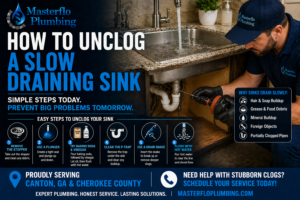


Tired of dealing with a clogged sink drain? Plunge the drain by creating a seal with a plunger and generating suction. Use baking soda and vinegar for a fizzy reaction to dissolve the blockage. Remove and clean the P-Trap underneath the sink for thorough unclogging. Try a drain snake by inserting and applying gentle pressure to break the clog. Boil water and pour it down the drain to dissolve minor clogs. Consider using a wet/dry vacuum for persistent clogs with powerful suction. For more effective ways to unclog a sink drain and get the water flowing smoothly, try these simple methods!
Key Takeaways
- Plunge the drain using firm pressure and quick movements to dislodge blockages effectively.
- Use baking soda and vinegar for a natural and cost-effective unclogging method.
- Remove and clean the P-Trap under the sink to clear clogs efficiently.
- Try a drain snake to break up and remove stubborn clogs from the drain.
- Boil water and pour it down the drain to dissolve minor clogs in an eco-friendly way.
Plunge the Drain
To effectively unclog a sink drain, begin by using a plunger to dislodge the blockage. Make sure there is sufficient water in the sink to cover the bottom of the plunger. Position the plunger over the drain and push down firmly, creating a seal. Then, quickly push and pull the plunger to generate suction and pressure to dislodge the clog. Repeat this action several times until the water starts draining properly.
Remember to utilize a plunger specifically designed for sinks, as toilet plungers have a different shape and may not be as efficient. It’s important to cover any overflow holes in the sink or nearby drains to make certain the plunger’s force is directed towards the clog.
If the plunger doesn’t completely clear the blockage, you may need to attempt other methods like using baking soda and vinegar or removing the trap under the sink. However, in many cases, a plunger can effectively unclog a sink drain without the need for additional steps.
Use Baking Soda and Vinegar
For unclogging a sink drain using baking soda and vinegar, consider starting with a mixture of these two common household ingredients. Begin by pouring half a cup of baking soda down the drain, followed by half a cup of vinegar. The combination will create a fizzy reaction that helps break down any clogs in the pipe. Let it sit for about 30 minutes to allow the solution to work its magic.
After the waiting period, flush the drain with hot water to wash away the loosened debris. This method is effective for minor clogs and can help freshen up the drain by eliminating odors. If the clog persists, you may need to repeat the process or try an alternative method.
Using baking soda and vinegar is a natural and cost-effective way to unclog your sink drain without resorting to harsh chemicals. It’s a simple DIY solution that can often provide satisfactory results with minimal effort.
Remove and Clean the P-Trap
Consider checking the P-Trap under your sink to eliminate any blockages and give it a thorough cleaning. The P-Trap is the curved section of pipe under the sink that traps debris and prevents sewer gases from entering your home. Before you start, place a bucket or a towel under the P-Trap to catch any water or debris that may come out.
Begin by locating the two slip nuts on the P-Trap. Use a pair of pliers to loosen these nuts and carefully remove the P-Trap from the pipes. Be prepared for some water and gunk to spill out once you remove the trap. Empty the contents of the P-Trap into the bucket and then clean it thoroughly using a brush and some soapy water.
Examine the P-Trap for any signs of damage or wear and tear. Once cleaned, reattach the P-Trap by tightening the slip nuts back in place. Run some water to check for leaks and make sure everything is functioning properly. Cleaning the P-Trap can often resolve common clogs and keep your sink draining smoothly.
Try a Drain Snake
If you’re still experiencing a stubborn clog, the next step is to try using a drain snake. This tool can help break up and remove blockages that are deeper in the pipes. Here’s how to use a drain snake effectively:
- Insert the snake: Push the snake into the drain opening and keep feeding it until you feel resistance.
- Turn the snake: Rotate the handle of the snake clockwise to help it maneuver through the pipes.
- Apply pressure: Once you feel the snake has reached the clog, apply gentle pressure to break it apart.
- Pull out the snake: Slowly retract the snake from the drain, ensuring it captures any debris on its way out.
- Test the drain: Run water to check if the clog has cleared. If not, repeat the process or try another method.
Boil Water Method
To clear a stubborn sink drain clog using the Boil Water Method, boil a kettle of water until it reaches a rolling boil. Once the water is boiling vigorously, carefully pour it directly down the clogged drain in a steady stream. The hot water can help break down and dissolve the clog, especially if it’s caused by grease or soap buildup. Allow the hot water to work its magic for several minutes.
It’s essential to use caution when handling boiling water to avoid burns or injuries. Make sure to pour the water slowly to prevent splashing. If the clog is particularly stubborn, you may need to repeat the process a few times to completely clear the drain. The Boil Water Method is a simple and eco-friendly way to tackle minor clogs without the need for harsh chemicals. After attempting this method, test the drain by running some water to see if the clog has cleared.
Use a Wet/Dry Vacuum
Once you’ve attempted the Boil Water Method, another effective way to unclog a sink drain is by using a Wet/Dry Vacuum. This method can help to remove stubborn clogs that are not easily dislodged by other means.
- Powerful Suction: The Wet/Dry Vacuum can create strong suction to pull out debris causing the clog.
- Versatility: It can be used on both wet and dry clogs, making it a versatile tool for various types of blockages.
- Easy to Use: Simply set the vacuum to vacuum up liquids, create a tight seal around the drain, and turn it on.
- Quick Results: The suction power of the vacuum often leads to quick results in clearing the clog.
- Minimal Mess: Using a Wet/Dry Vacuum is a relatively clean method compared to some other unclogging techniques.
Consider using a Wet/Dry Vacuum if you are dealing with a persistent clog that has not responded to other methods. Remember to take appropriate safety precautions and follow the manufacturer’s instructions when using the vacuum for this purpose.
Make a DIY Drain Cleaner
Consider mixing a DIY drain cleaner using common household ingredients to effectively tackle minor sink clogs. One simple recipe involves pouring a pot of boiling water down the drain, followed by half a cup of baking soda. Let it sit for a few minutes before pouring a mixture of one cup of vinegar and one cup of hot water on top. Cover the drain with a plug to contain the fizzing reaction, and after about 10 minutes, flush the drain with another pot of boiling water. This combination can help break down grease and grime that may be causing the clog.
Another option is to combine half a cup of salt, half a cup of baking soda, and half a cup of vinegar. Pour this mixture down the drain, let it sit for about 15 minutes, then flush with hot water. The abrasive nature of salt, coupled with the fizzing action of the baking soda and vinegar, can help dislodge debris and clear the drain effectively. These DIY drain cleaners offer a natural and cost-effective solution for minor sink clogs.
Conclusion
Masterflo Plumbing is North Georgia’s most trusted plumbing company. With over 20 years of experience and staffed with master plumbers, our team is equipped and ready to serve your plumbing needs. Whether you need water heater repair or replacement, or have minor and major plumbing issues, you can count on Masterflo Plumbing for all your plumbing needs throughout Cherokee County and metro Atlanta.