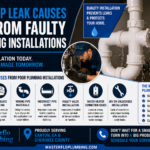


If you’re experiencing water heater leaks, three common culprits might be at play. First, corrosion in the tank due to chemical reactions can create small holes or cracks, leading to leakage. Additionally, high water pressure can strain the heater and cause leaks from the pressure relief valve. Finally, loose or damaged seals can deteriorate over time, particularly under high temperatures. Understanding these causes can help you tackle leak issues effectively.
Key Takeaways
- Corrosion in the tank leads to small holes and leaks.
- High water pressure strains the heater and causes leaks.
- Loose or damaged seals can result in water heater leaks.
- Pressure relief valve issues can cause leaks.
- Sediment buildup in the tank can lead to leaks.
Corrosion in the Tank
If you notice water leaking from your water heater, corrosion in the tank may be the culprit. Corrosion occurs when the metal in your water heater tank deteriorates over time due to chemical reactions between the hot water and the steel or iron components of the tank. This can lead to small holes or cracks forming in the tank, causing water to leak out.
To prevent corrosion in your water heater tank, consider installing a sacrificial anode rod. This rod attracts corrosive elements in the water, protecting the tank from deterioration. Regular maintenance, such as flushing the tank to remove sediment buildup, can also help prevent corrosion.
If you suspect that corrosion is causing your water heater to leak, addressing the issue promptly is crucial. Ignoring corrosion can lead to more significant problems, such as a complete tank failure and water damage to your home. In such cases, it’s best to contact a professional plumber to assess the situation and recommend the necessary repairs or replacements.
High Water Pressure
High water pressure can put excessive strain on your water heater, potentially leading to leaks and other issues. When the pressure inside your plumbing system is too high, it causes your water heater to work harder to heat and distribute water throughout your home. This increased pressure can weaken the water heater’s components over time, making it more susceptible to leaks.
One common sign of high water pressure is a banging or knocking noise coming from the water heater. This noise occurs when the pressure causes the water to move too quickly through the pipes, creating a hammering effect on the heater itself. Additionally, you may notice that your water heater is leaking from the pressure relief valve or other connections due to the strain.
To prevent high water pressure from damaging your water heater, consider installing a pressure regulator. This device controls the pressure within your plumbing system, ensuring it stays at a safe level for your water heater and other appliances. Monitoring your water pressure regularly can help you catch any issues early on and avoid costly repairs in the future.
Loose or Damaged Seals
Experiencing leaks from your water heater could also be attributed to loose or damaged seals within the system. Here’s why this issue might be causing you trouble:
- Age: Over time, the seals in your water heater can deteriorate due to wear and tear, leading to potential leaks. It’s crucial to monitor the condition of these seals regularly.
- Proper Installation: If the seals were not installed correctly in the first place, they may not provide a proper barrier against leaks. Make sure that your water heater was installed by a professional to avoid this issue.
- High Temperatures: The constant exposure to high temperatures can cause the seals to degrade faster. Consider lowering the temperature setting on your water heater to prolong the life of the seals and prevent leaks.
Conclusion
Masterflo Plumbing is North Georgia’s most trusted plumbing company. With over 20 years of experience and staffed with master plumbers, our team is equipped and ready to serve your plumbing needs. Whether you require water heater repair or replacement, or have minor and major plumbing issues, you can rely on Masterflo Plumbing for all your plumbing needs in Cherokee County and metro Atlanta.